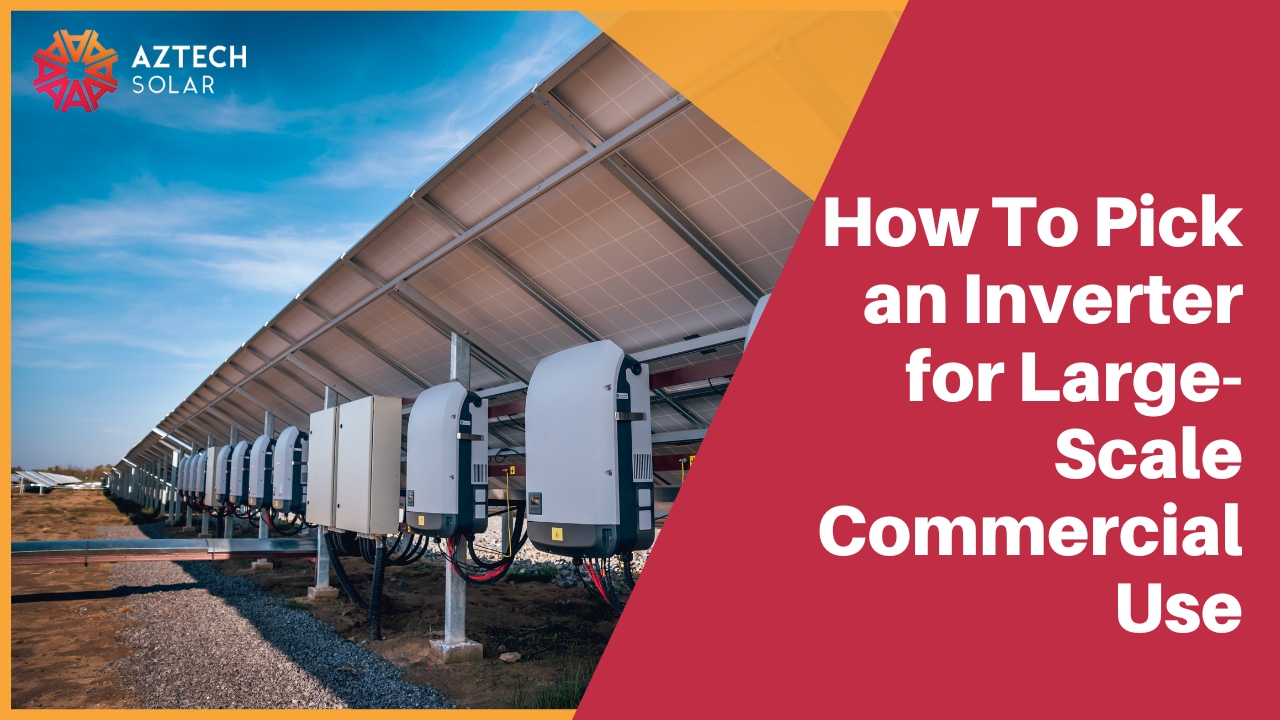
When you move beyond small residential solar and start planning commercial or industrial-scale solar, choosing the right inverter becomes much more important. Commercial inverters need to handle larger power loads, more complex wiring and grid-connection requirements, and deliver reliable performance over many years.
Why Inverter Choice Matters for Commercial Systems
In a commercial solar system, the inverter does more than convert DC electricity from solar modules into AC for use in your facility. It sits at the core of how efficiently and reliably your system delivers power and satisfies grid and regulatory requirements. Mistakes in inverter selection can lead to inefficiency, compliance issues or premature failure.
Commercial inverters differ substantially from typical home-use inverters. They are built for higher capacity, more robust control and monitoring, support for three-phase power, and often include features required by grid operators and standards for industrial installations.
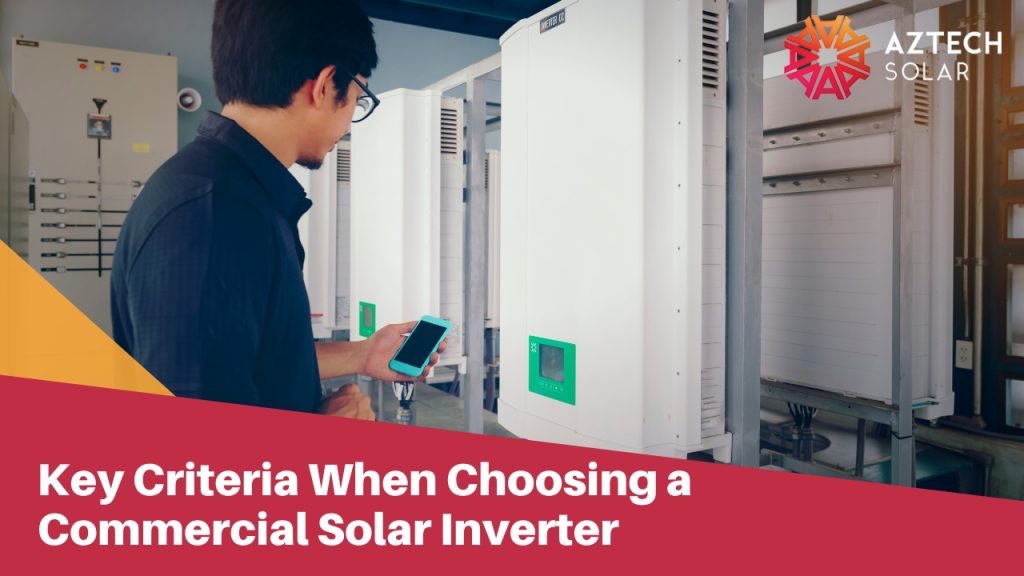
Key Criteria When Choosing a Commercial Solar Inverter
When evaluating inverters for a commercial or industrial solar system, focus on.
System size and inverter capacity
- The inverter’s rated AC output must be suited to the overall solar array size. Oversizing solar panel capacity relative to inverter output (within acceptable limits) is common to maximise yield.
- For large installations multiple strings or arrays, or high-voltage systems, central inverters or high-capacity three-phase string inverters are often more appropriate than standard residential units.
- A correctly sized inverter ensures efficient conversion from DC to AC, minimising energy loss.
Certification and compliance
- The inverter must be approved under Australian standards (including grid-connection standards) to be eligible for compliance, connection approval and any relevant rebates or incentives.
- Especially for commercial and industrial systems, inverters should support required grid-interface controls, safety isolations and protection settings that meet local network-service provider (DNSP) requirements.
Key Factors to Consider
System size and inverter capacity
The inverter must match the size of your array. In commercial systems, it is common to have several strings of panels across large roof sections or ground mounted areas. Oversizing the solar array relative to the inverter within recommended limits can improve energy yield, especially during low light periods.
Central inverters or high capacity three phase string inverters are often ideal for large sites.
Compliance with Australian standards
Your inverter must meet all relevant Australian electrical and grid connection standards. This ensures your installation can be approved by the network provider and that the system operates safely.
Commercial sites often have stricter grid requirements due to their size. The inverter must support voltage regulation, protection settings, export limits and any controls required by the local network operator.
Choosing the right type of inverter
Different commercial sites suit different inverter types.
String Inverters
Suitable for large rooftops or mid-sized installations that need several independent strings and multiple MPPT trackers.
Central Inverters
Used in large industrial and solar farm applications. These handle very high-power levels and combine many panel strings into one unit.
Hybrid or battery compatible inverters
Useful if the site intends to add battery storage for peak shaving, backup power or load shifting.
Efficiency and durability
Commercial systems operate for long periods and often in harsh outdoor conditions. High efficiency inverters reduce energy losses and improve overall system output.
Look for strong environmental protection ratings, robust cooling systems, quality internal components and a long manufacturer warranty. A reliable service network is also important.
Monitoring and control features
Commercial sites require detailed monitoring to keep performance on track and identify issues early. Look for:
- Multiple MPPT channels
- Remote monitoring and data access
- Detailed system reporting
- Fault alerts and diagnostics
- Export control and grid support functions
If batteries are included or planned, make sure the inverter can communicate and manage storage functions.
Future expansion
Many commercial customers expand their systems over time. Choose an inverter layout that allows additional panels, new strings or battery integration without requiring major equipment replacement.
Steps to Choosing the Right Inverter
- Define the system size and your business energy requirements.
- Decide whether string inverters or a central inverter best suit your site.
- Confirm that the inverter meets Australian standards and grid requirements.
- Review technical specifications including MPPT inputs, efficiency, cooling and protection features.
- Consider durability, warranty coverage and local support options.
- Ensure the inverter provides the level of monitoring and control needed for commercial performance.
- Work with a qualified commercial solar designer to verify sizing, layout and compliance.
Common Mistakes to Avoid
- Using residential inverters in a commercial installation.
- Ignoring network requirements such as export limits and voltage control.
- Choosing an inverter with too few MPPT channels for a complex roof layout.
- Selecting the cheapest model instead of one designed for heavy commercial use.
- Failing to plan for long term expansion or battery compatibility.
Talk to Aztech Solar About the Right Inverter for Your Commercial System
Choosing the right inverter is not something you need to figure out alone. Aztech Solar designs and install commercial solar systems across NSW and can recommend an inverter that suits your building layout, energy needs and long-term goals. Our team handles system design, compliance, installation and monitoring so your business gets the best performance from day one.