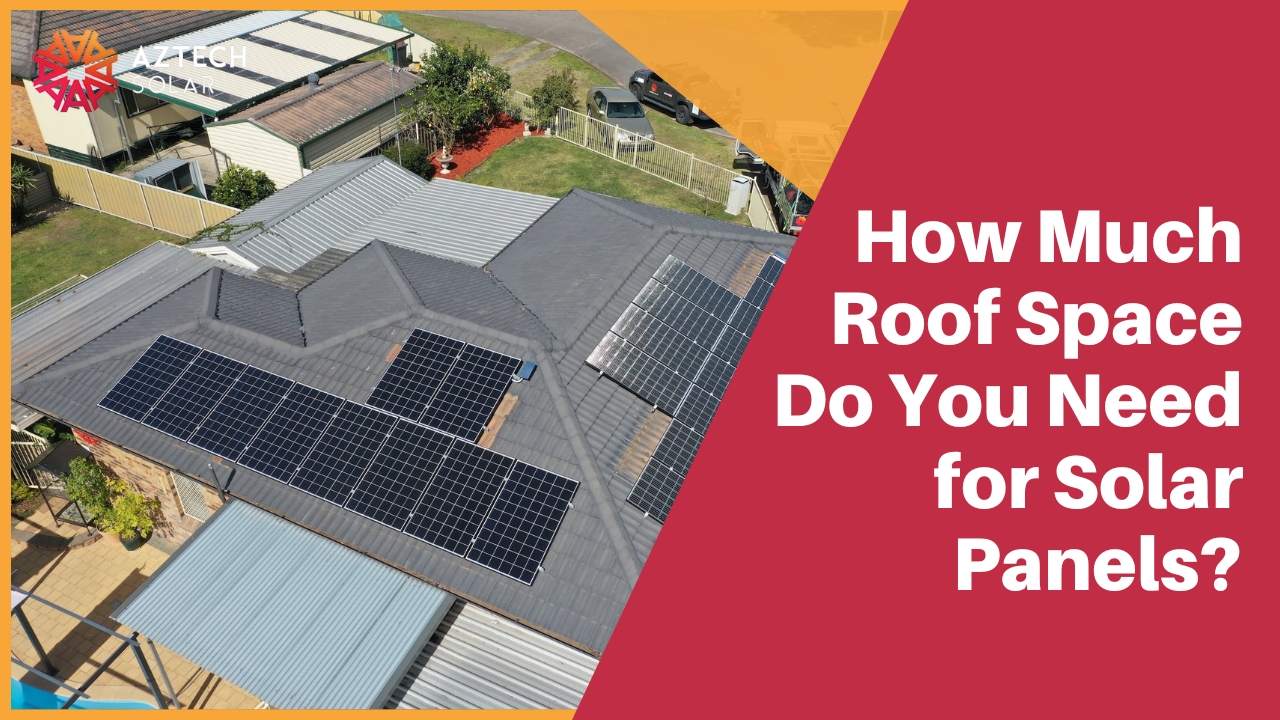
It’s one of the most common questions we hear from homeowners. Before committing to solar, people want to know whether their roof is actually big enough and that’s a fair thing to want to know upfront.
The short answer is that most Australian homes have enough usable roof space for a decent-sized system. But roof area is only part of the picture. Orientation, shading, roof pitch, and the wattage of the panels you choose all affect how much you can actually fit and how well it performs.
Here’s a practical rundown of what to expect.
How Much Space Does Each Panel Take Up?
A standard residential solar panel is roughly 1.7m x 1.1m, so about 1.9 square metres per panel. Higher-wattage panels are sometimes slightly larger, but most residential models sit in that range.
Current panels from reputable brands typically range from 420W to 510W per panel. The higher the wattage, the fewer panels you need for the same system output, which matters if your usable roof space is limited.
As a rough guide:
- 6.6kW system (16 x 415W panels) – approximately 30-32 square metres
- 10kW system (20 x 500W panels) – approximately 38-40 square metres
- 13.2kW system (24 x 550W panels) – approximately 46-50 square metres
These are usable area figures meaning the actual space the panels occupy on the roof, not total roof area. You also need clearance around the panels for maintenance access, and some roof features reduce what’s available.
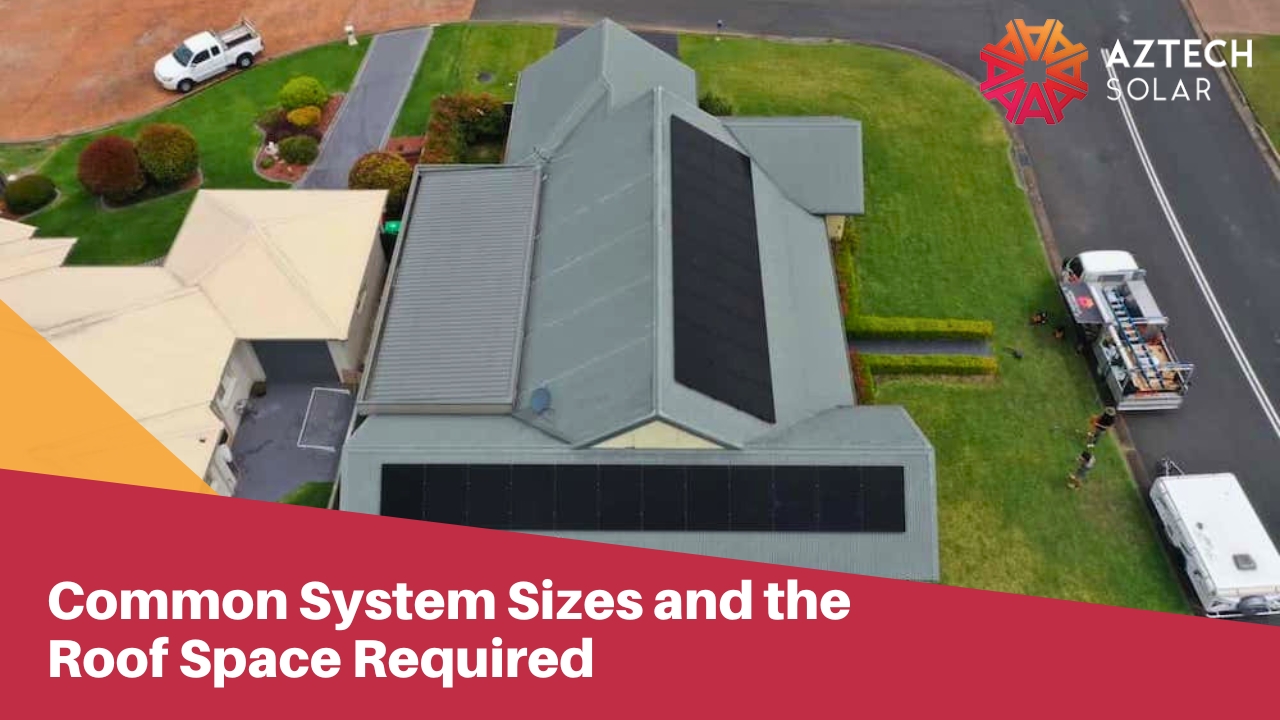
Common System Sizes and the Roof Space Required
Most residential installations in Australia fall between 6.6kW and 13.2kW. Here’s how that looks in practice.
6.6kW System
This is the most popular system size for average households. You’re looking at 16 panels (using 415W panels) or as few as 13 panels (using 510W panels). Roof space required: roughly 25 to 32 square metres of clear, usable space.
A standard single-storey home in the Hunter Valley typically has no trouble accommodating this on a north-facing roof section.
10kW System
More appropriate for larger homes or households with higher energy usage, ducted aircon running most of the year, a pool pump, an EV charger. You’re looking at around 38 to 42 square metres of usable space, depending on panel wattage.
13.2kW System
This is the maximum most residential grid-connect systems can be without additional approvals from Ausgrid or Essential Energy. Expect to need 46 to 52 square metres of usable roof space. Homes with split roof sections, some north, some east or west can often accommodate this by using multiple roof faces.
What Actually Reduces Your Usable Roof Space
Total roof area and usable panel area aren’t the same thing. A few things eat into what’s workable:
Shading
Trees, neighbouring houses, chimneys, and satellite dishes all cast shadows. Even partial shading on one panel affects the output of that string. If shading is unavoidable, microinverters or DC optimisers can limit how much it impacts the whole system but the affected panels still aren’t ideal placement.
Roof Orientation
North-facing is best in Australia, it gets the most sun throughout the day. East and west-facing panels still work well and can actually improve your morning and afternoon self-consumption. South-facing panels produce significantly less and are generally avoided unless there’s no other option.
If your usable north-facing area is limited, splitting the array across north and west or north and east is a practical solution that most installers use regularly.
Roof Pitch
Very low-pitch or flat roofs sometimes require tilted mounting frames to get panels to an effective angle, which takes up more space per panel and can create shading between rows. Very steep roofs can make installation more complex. The sweet spot for most Australian roofs is around 15 to 30 degrees.
Roof Penetrations and Features
Skylights, vents, flues, whirlybirds, and AC units all take up space and create exclusion zones around them. A roof that looks generous from the street can lose a surprising amount of workable area once these are mapped out.
Structural Limitations
Older homes sometimes have rafters or battens that need upgrading before additional weight can be added. This isn’t common, but it does come up on homes built before the 1980s. A site assessment will pick this up before installation begins.
What If You Don’t Have Much Roof Space?
Smaller roof area doesn’t necessarily mean a small system. Higher-wattage panels mean you get more output from the same footprint. Aztech Solar’s solar panels range includes panels up to 510W per module, which means you can fit a 6.6kW system into a noticeably smaller area than you could with older 300W panels.
It’s also worth considering a battery storage system if your roof limits how much you can generate. A smaller solar array paired with a battery can often perform better financially than a large array on a poorly oriented or partially shaded roof.
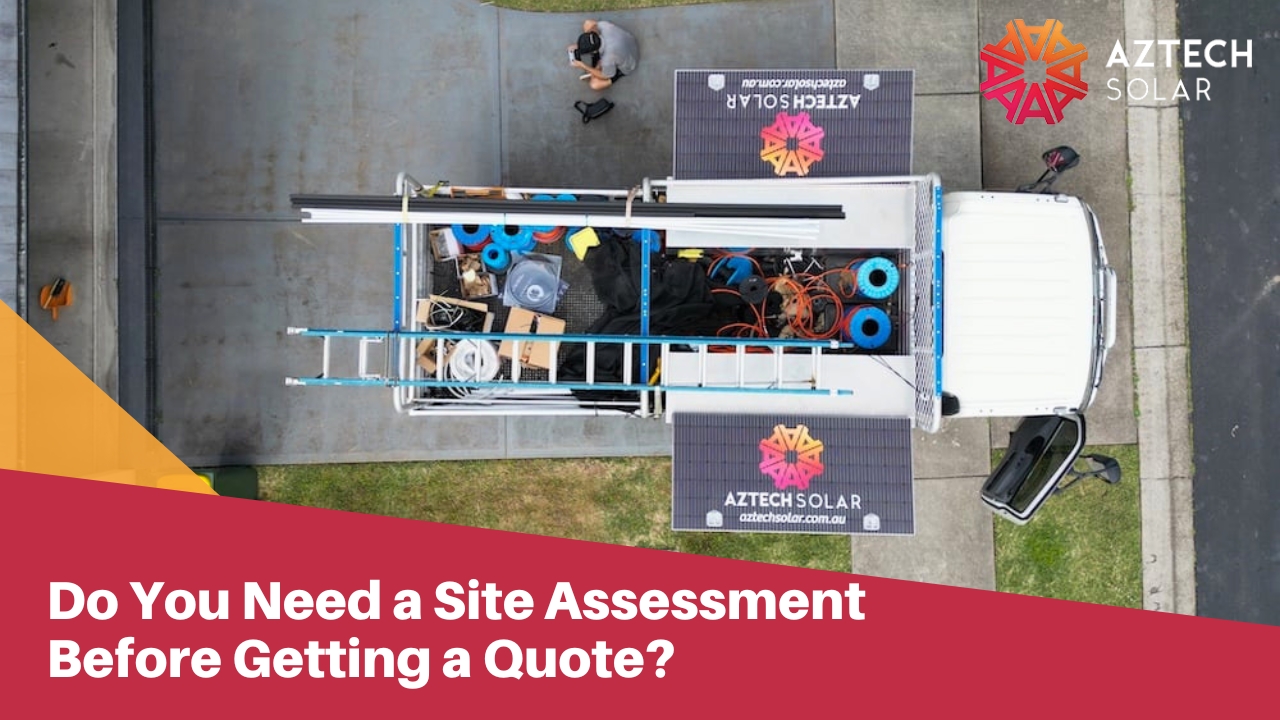
Do You Need a Site Assessment Before Getting a Quote?
Yes, any reputable installer will do one before finalising a system design. A proper assessment looks at:
- Available roof area and orientation
- Shading analysis (often using software tools)
- Structural condition of the roof
- Metre board location and switchboard capacity
- Your household’s energy usage patterns
Generic online quotes that don’t account for your specific roof layout can lead to undersized or poorly positioned systems. The upfront effort on a proper assessment pays off once the system is running.
Typical Results for Hunter Valley and Newcastle Homes
Most homes we work with across Newcastle, Maitland, Lake Macquarie, Cessnock and the Hunter Valley are single or double storey with tiled or Colorbond roofs. The majority have enough north or north-west facing roof space for a 6.6kW to 10kW system without needing to use less ideal roof faces.
Two-storey homes are less common for larger systems but not unusual, it depends on the roof footprint and pitch. Some of the older homes in inner Newcastle suburbs have smaller roof sections due to heritage features or unusual roof geometry, which is where higher wattage panels make a real difference.
If you’re not sure whether your roof works for solar, the best starting point is a quote with a proper site review. Get in touch with Aztech Solar on 1300 992 922 or request a quote online. We cover Newcastle, Hunter Valley, Lake Macquarie, Maitland, Cessnock, Port Stephens and surrounds.