Many NSW households are turning to battery storage to get more value from their solar systems. The Tesla Powerwall is one of the most popular choices, and a common question is how it works with feed in tariffs. With export rates dropping across most electricity retailers, more people want to understand if a battery is now the smarter way to save.
This guide explains how the Powerwall interacts with feed in tariffs, how it affects your bill, and what to consider before adding one to your home.
What the Powerwall Does
A Tesla Powerwall stores excess solar energy so you can use it later. Instead of sending unused solar back to the grid during the day, the battery holds it for evening and overnight use.
The goal is to increase the amount of solar energy you use directly. When you rely less on the grid, you are exposed to fewer price rises and can manage your electricity costs more effectively.
How Feed in Tariffs Work with a Powerwall
A feed in tariff is the rate you are paid for exporting solar to the grid. These rates were once strong enough to generate large bill credits, but they have dropped significantly.
As a result, exporting is no longer as valuable as using your solar at home. This is where a Powerwall helps.
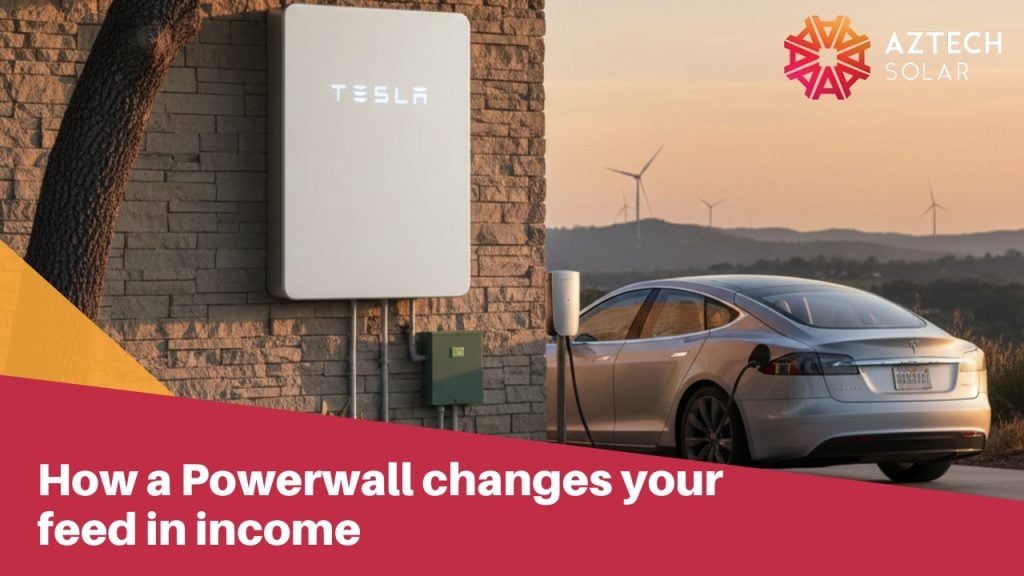
How a Powerwall changes your feed in income
With a Powerwall, you export less and store more. This usually means fewer credits on your bill, but a much bigger reduction in the amount of power you buy from the grid. For most households, the saving from using stored energy outweighs what you would previously earn from exporting.
Can a Powerwall still export?
Yes. If the battery is full or you enable export settings, the system can still send energy to the grid. Your standard feed in tariff applies when this happens.
Some homeowners also join virtual power plant programs, where stored energy is exported during high demand periods.
Getting the Most Value from a Powerwall in NSW
Prioritise self consumption
Most NSW homes benefit from setting the Powerwall to supply household loads first. This gives stronger bill savings than exporting.
Choose the right electricity plan
Time of use tariffs often work well with a battery because you can avoid expensive evening rates by using stored solar.
Consider seasonal variation
In summer you may still export more due to high solar production. In winter the Powerwall becomes more valuable as it reduces your reliance on peak time grid power.
Look at the whole plan, not just the feed in rate
Retailers adjust tariffs throughout the year. Compare supply charges, usage rates and solar conditions before choosing a plan.
Is a Powerwall Worth It with Low Feed in Tariffs?
In most cases, yes. Lower export rates make battery storage more appealing because stored energy offsets higher grid prices. A Powerwall offers:
- Lower evening and overnight usage costs
- Protection during outages
- More control over your energy use
- Better long-term value from your solar system
FAQs
Does a Powerwall increase my solar savings?
Yes. It increases self-consumption and reduces how much electricity you buy from the grid, which usually creates better long-term savings.
Will a battery remove my feed in tariff?
No. You can still export excess solar. The amount you export just becomes smaller because your home uses more of its own power.
Can I run my home during a blackout?
If your system is configured for backup, a Powerwall can supply essential circuits during outages.
Is it better to export or store solar?
With today’s low feed in tariffs, storing solar often gives stronger financial benefit than exporting it.
Do feed in tariffs affect battery payback time?
Yes. The lower the tariff, the more attractive battery storage becomes because the value of self-consumption increases.

Local High-Quality Solar and Battery Storage Solutions
If you are considering a Tesla Powerwall, Aztech Solar can design a system that works with your home, your solar setup and your budget. Our team helps NSW homeowners get the most value from their solar by balancing battery storage, system size and energy plans.
Get in touch with us today to find out how affordable solar power installation can be or leave your contact details and we will be in touch within 24 hours.