For most homes, yes. One Powerwall 3 delivers up to 11.04 kW of continuous power, which covers everyday circuits, the fridge, lighting, Wi-Fi, a washing machine, a kettle and an induction cooktop, with room to spare. It can also start heavy appliances like a ducted air conditioner or a pool pump without tripping, something a lot of home battery systems struggle with. Where it gets more specific is homes with a large ducted system, a pool, and an EV all trying to run at once, or homes on three-phase power. Here’s how to work out where you sit.
What whole home backup means
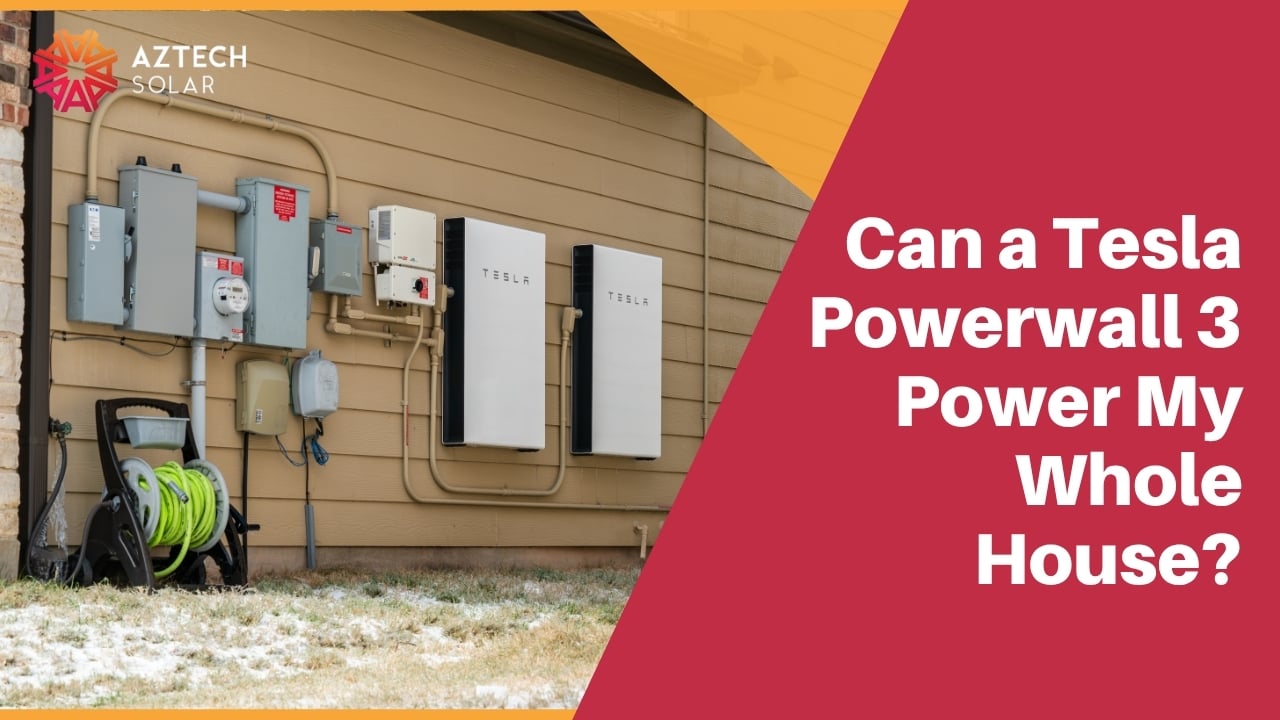
Powerwall 3 connects through a Backup Gateway 2, which disconnects your home from the grid the moment it detects an outage and switches to battery power automatically. Whole home backup means every circuit in the switchboard stays live. The alternative is partial backup, where only a chosen set of essential circuits, lights, the fridge, wifi, a few power points, keep running.
Which one suits your home comes down to your continuous load, not just your total floor area. Powerwall 3 is a single-phase unit. On a three-phase home, backup is available on the phase it’s wired to, so a full three-phase whole home setup usually needs the load split and planned properly at the switchboard, or more than one unit.
What one Powerwall 3 can run at once
Powerwall 3 outputs 5, 10 or 11.04 kW depending on configuration, with 11.04 kW the one usually installed in Australian homes. It can also start heavy loads rated up to 185 A locked rotor amps, which is the surge a motor draws the instant it kicks over. That’s what lets it start a ducted air conditioning compressor or a pool pump without tripping, a point where plenty of older or smaller battery systems fall short. Full specifications are on our Tesla Powerwall 3 product page.
Here’s roughly where common household loads sit against that 11.04 kW ceiling. Figures are typical running loads, not appliance-specific, so check the rating plate on anything you’re planning around.
| Appliance or circuit | Typical running load | Fits within 11.04 kW? |
| Fridge, wifi, LED lighting, phone chargers | Under 0.5 kW combined | Yes, easily, all day |
| TV and home entertainment | 0.1 to 0.3 kW | Yes |
| Kettle or toaster | 1.2 to 2.4 kW | Yes, on its own or with the essentials |
| Induction cooktop, one zone | 1.4 to 3.6 kW per zone | Yes, one or two zones at once |
| Washing machine | 0.3 to 1.5 kW, more during a hot wash | Yes |
| Electric hot water system | 2.4 to 3.6 kW while heating | Yes, but adds up fast with other loads running |
| Pool pump, variable speed | 0.3 to 0.5 kW | Yes, comfortably |
| Pool pump, single speed | 1 to 2 kW | Yes, but worth switching to variable speed for backup |
| Single-phase EV charger | Up to 7.4 kW (240 V, 32 A) | Yes alone, tight alongside everything else |
| Ducted reverse cycle aircon | 3 to 10+ kW, depends on size | Depends on size and other loads |
Three load scenarios, from light to heavy
A typical Australian household uses somewhere around 15 to 20 kWh of electricity a day, spread unevenly across the day rather than as a flat draw. Backup load looks different again, since it’s whatever happens to be running at the moment the power drops. Here’s what that looks like at three levels:
- Overnight essentials, around 0.3 to 0.6 kW continuous: fridge, wifi router, a few LED lights, phone chargers. Well inside Powerwall 3’s output, and light enough that 13.5 kWh usable energy could cover well over 20 hours on its own.
- A normal evening, around 2 to 4 kW: the above plus the TV, an induction cooktop running a couple of zones, a hot water top-up, and a load of washing. Still comfortably inside the 11.04 kW ceiling, though the battery will drain faster, likely somewhere in the 4 to 6 hour range depending on exactly what’s on.
- Everything at once, potentially 8 kW or more: a ducted air conditioner cycling on, the oven, an EV charging at 7.4 kW, and the everyday loads above running in the background. This is where you start pushing toward the 11.04 kW ceiling, and where the battery empties fastest, possibly in under two hours if the ducted system and EV charger are both drawing hard.
Those figures are illustrative, based on typical appliance loads rather than your specific home. An installer can size a system against your actual usage data rather than a rule of thumb.
Where the limits are
Charging is the ceiling nobody mentions. Powerwall 3 discharges at up to 11.04 kW but charges at no more than 5 kW, whether that charge comes from solar or the grid. During an extended outage with limited sun, that 5 kW cap decides how much the battery can top up between uses, not the size of your solar array.
EV charging during an outage is possible, but only if the charger sits on a circuit the Powerwall backs up, and it competes with the rest of the house for that same 11.04 kW. Tesla’s coordinated charging feature, which throttles or pauses your vehicle before the battery runs the house flat, only recognises Tesla vehicles. Other EVs will keep drawing at whatever rate the charger is set to until you intervene, which can empty a battery in a few hours on a single-phase 7.4 kW charger. Tesla’s own guidance on this sits on its vehicle charging during a power outage support page.
Multi-day outages are the other edge case. A single Powerwall 3 is sized around daily cycling, not standalone off-grid running. Getting through a genuinely extended outage depends on your solar array recharging the battery through the day, which brings you back to that 5 kW charge ceiling, plus the weather cooperating. Tesla’s own advice for storm season is to do energy-intensive jobs before the outage hits and set a higher backup reserve if outages are common in your area.
If your numbers are consistently pushing past what one unit handles, Powerwall 3 scales. Up to four units, or one Powerwall 3 with up to three Expansion units behind it, each adding 13.5 kWh without adding another inverter. We’ve covered the way that scales in our Powerwall 3 performance and backup guide.
Working out where your home sits
The honest answer depends on what’s plugged in when the power goes out, not on square metreage or a generic star rating. A three-bedroom home with a normal fridge, lighting and a small split system is well inside one Powerwall 3’s range for whole home backup. A larger home running a big ducted system, a pool, and EV charging at the same time needs the load properly planned, and might be better served by an Expansion unit or a second Powerwall 3. If you’re weighing Powerwall 3 up against other systems on the market, our solar battery comparison runs through the alternatives.
The straightforward way to know for certain is to have someone read your actual usage data against the numbers above, rather than guess from a spec sheet. Book a free onsite quote with Aztech Solar or call 1300 992 922, and we’ll size a system against what your home genuinely draws, not an average.
Can a Powerwall 3 run a whole house with ducted air conditioning?
In most cases yes, since 11.04 kW covers a typical ducted system’s running load plus everyday circuits. A large system paired with a pool pump and other big loads running at the same time is where it’s worth confirming the combined figure with an installer before assuming whole home backup.
Will a Powerwall 3 charge my EV during a blackout?
Yes, if the charger is wired onto a circuit the Powerwall backs up. It will draw from the same 11.04 kW pool as the rest of the house, and only Tesla vehicles get automatic throttling to protect the battery.
How long will a Powerwall 3 last during an outage?
It depends entirely on what’s running. Essentials only, it can stretch well past 20 hours from a full charge. Heavy loads running together can empty it in under two hours. There’s no single number that applies to every home.