No, not on its own. The moment the grid drops, your inverter shuts down and stays down, even in bright sunshine. That isn't a fault. AS/NZS 4777.2 requires every grid-connected inverter in Australia to disconnect within two seconds of losing the grid, so your system can't push power into a dead line while someone is working on it. Getting power during a power outage means adding hardware, and there are three levels of it. They cost wildly different amounts, and that difference is where most people get caught at quote stage.
Anti-islanding is the safety function that makes a grid-connected inverter disconnect the moment the grid goes down.
Why does your inverter shut down in a power outage?
Anti-islanding. Without it, a solar system would keep energising the street wiring after the grid failed, and a line worker who had isolated the network could still be hurt. AS/NZS 4777.2 makes the disconnect mandatory within two seconds. Every inverter sold for grid connection in Australia does this.
It also explains the pause when power comes back. Inverters wait at least 60 seconds after the grid is stable before reconnecting, so a flickering supply doesn't have thousands of systems switching on and off in unison. If your solar takes a few minutes to start producing after an outage, nothing is wrong.
Worth being clear about what is and isn't happening here. Your panels are fine. Your inverter is fine. The system has done what it was designed and certified to do, and every inverter on the Clean Energy Council approved list behaves the same way.
The three levels of backup, and what each one gives you
Backup ranges from nothing staying on at all through to a house that keeps running. Level one is a battery with no backup hardware, which gives you no power in an outage. Level two powers nominated circuits from the battery. Level three covers the whole switchboard. Each step adds hardware, and each step adds cost.
A battery on its own, which keeps nothing on
This is the level people end up at by accident. A battery installed for self-consumption stores your solar and trims your bills, then shuts down with everything else the moment the grid drops. Nothing stays on. Backup is a separate decision made at design stage, and on most quotes it is a separate line.
It also rules out the cheapest thing people ask us about, which is one emergency socket running straight off the panels in daylight with no battery at all. A few inverters on the market do that. GoodWe and Sigenergy don't, and GoodWe's ESA installation manual says the backup function is not recommended where no battery is configured.
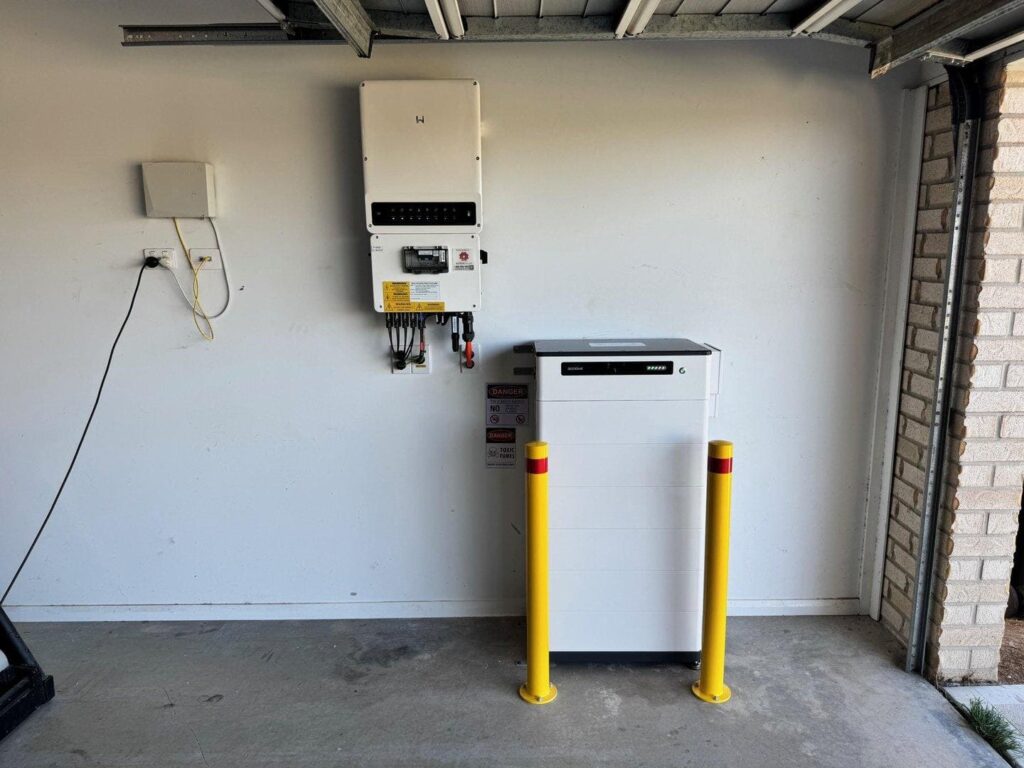
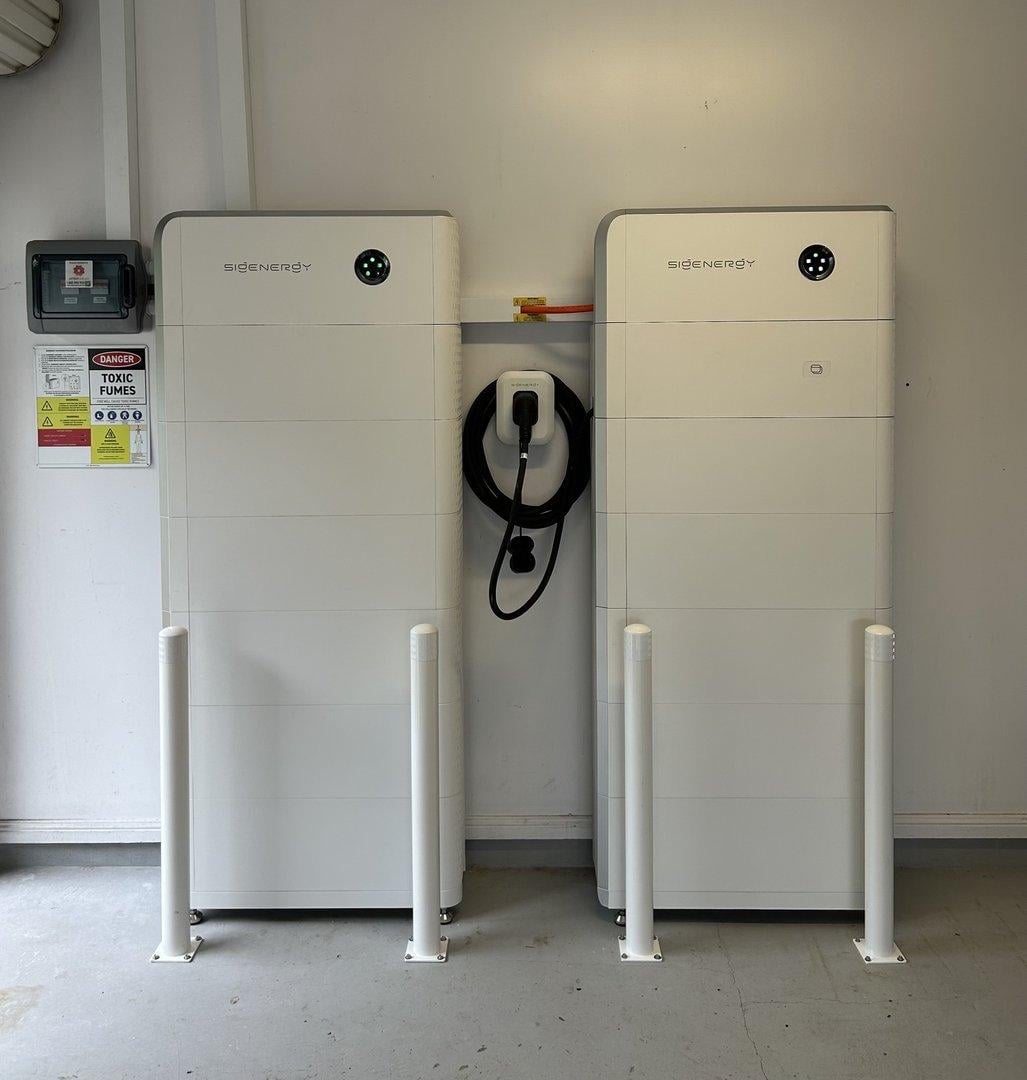
The two systems we fit most often for backup are the GoodWe ESA Series and the Sigenergy SigenStor. The ESA is an all-in-one unit, single phase 3 to 10 kW, with 5 kWh and 8 kWh battery modules you stack as you need them. The SigenStor puts the solar inverter, battery, energy management and an optional DC EV charger into one tower. Both are Clean Energy Council approved, and both handle the switching differently, which is where quotes start to diverge.
So the question at quote stage is not whether there is a battery. It is whether the system has been set up to island, meaning it disconnects from the grid and runs your house on its own. That is what the next two levels pay for.
Selected circuits, battery plus changeover switching
Step up and nominated circuits stay live through the night. This needs two things beyond the inverter: a battery, and a switching device that physically disconnects your home from the grid so the inverter can safely form its own supply.
Where that switching device lives is the main difference between the two brands. The SigenStor needs the Sigen Energy Gateway, which is a separate box and a separate line on the quote, and without it nothing is backed up. The GoodWe ESA has the switching built in, so there is no extra gateway to buy. People read the word backup on a spec sheet, assume it is included, then find a component they weren't expecting. Read the quote for the brand you are being offered.
You choose which circuits go on it at design stage. Usually that's the kitchen, one lighting circuit, the internet router and a few general power points. Our battery storage options page covers the hardware side.
Whole home backup
Everything on the switchboard stays live, limited by what the inverter and battery can supply at any one moment. Both systems do it. GoodWe's Australian datasheet rates the ESA at up to 63A of bypass current, which covers a typical single phase home. Sigenergy does it through the Gateway, which backs up the whole house unless it has been set up to pick circuits.
Changeover is quick on both. GoodWe lists the ESA switching between grid and off-grid in under 10 milliseconds, and Sigenergy specifies no load-side interruption at all when the Gateway, the Energy Controller and the battery are used together. A computer or a router should ride through the switch without restarting.
The limit isn't the backup hardware. It's how much power the battery can push at once, and how much energy it holds. We've worked through that in detail in what one battery can run in a whole house.
What will a backup circuit run?
A typical 5 kW backup setup comfortably runs a fridge, LED lighting, the internet router, phone and laptop charging, and a few general power points. It will not run ducted air conditioning, an electric oven, electric hot water or EV charging. Those loads draw more than the system can supply.
| Load | On a typical 5 kW backup |
| Fridge and freezer | Yes, once there is a battery and backup has been configured. |
| LED lighting | Yes |
| Internet router, phone and laptop charging | Yes |
| Kettle, toaster or microwave | One at a time |
| Ducted air conditioning | No |
| Electric oven or cooktop | No |
| Electric hot water | No |
| EV charging | No |
The honest version is that backup keeps a house liveable, not normal. You can keep food cold, see what you're doing, stay online and boil a kettle. You can't run the house as though nothing had happened.
What to ask before you sign a quote
- Is backup included, or is the inverter only backup capable? Those are different things.
- Which circuits are backed up, and is that list written on the quote?
- Is the switching device a line item, or has it been assumed?
- How long is the changeover, and does anything in the house need to ride through it?
- What happens when the battery is empty and the outage is still going?
That last question separates the systems. Most stay down until the grid returns. The GoodWe ESA keeps using solar through an outage, charging the battery during the day so your backup loads come back when the sun does. A SigenStor can black start from solar after the battery has been run flat, as long as at least one string is wired directly into the Energy Controller, which is a decision made at install rather than afterwards.
Setting this up in Newcastle and the Hunter
Ausgrid runs the network across Newcastle, Lake Macquarie and the Hunter, and your installer notifies them when a battery or backup system goes in. It's part of the job rather than something you arrange.
Storm season is when this gets tested. East coast lows and summer thunderstorms cause a power outage somewhere across the region most years, and the more rural parts of the valley can wait longer for crews. Storm Watch in the mySigen app charges a SigenStor and holds that charge when severe weather is forecast, which counts for a lot in a region that gets storm warnings as often as this one does.
The same weather that causes the outage changes what your solar can do during it, which we've covered in how solar panels handle Australian weather.
Frequently asked questions
Can I add backup to a solar system I already have?
Sometimes. It depends on whether your existing inverter supports a backup function, and most older string inverters don't. Where the inverter can't do it, an AC coupled battery with its own backup capability is usually cheaper than replacing the inverter, and the GoodWe ESA comes in an AC coupled version built for that job. Our inverter range shows which models carry the function.
Does a battery on its own give me backup?
No, and this is the misconception that catches people out. A battery installed for self-consumption, without the backup hardware, shuts down with everything else when the grid fails. The battery stores the energy. The switching hardware, a separate gateway on some systems and built into the unit on others, is what lets your home run separately from a dead grid. Ask whether backup is configured, not just whether a battery is included.
How long will backup last?
As long as the battery holds out, extended by whatever the panels put back during daylight. A 10 kWh battery running a fridge, lights and a router draws roughly 3 to 5 kWh overnight, so it can cover a night comfortably and keep going for days if the sun is out. Heavy loads shorten that quickly.
Will my solar charge the battery during a power outage?
Yes, where the system is configured for it. Solar keeps topping the battery up through the outage, which is what lets a well-sized system run for days rather than hours. Without a battery there is nothing to charge and nothing to run the house, so solar on its own leaves you with no power at all.
Find out what your system would do
Tell us what you'd want running if the power went out for two days, and we'll tell you what that takes on your system and what it costs. Request a quote or call 1300 992 922.